By: Dr. Myra Ochieng
Clinical Operations Lead (Radiopharmacist)
On May 6th 2025, Kenya announced a major breakthrough in the provision of the first Lutetium-177 Prostate Specific Membrane Antigen (Lu-177 PSMA) Therapy for advanced prostate cancer. Prostate cancer remains a significant health concern and remains a leading cause of mortality among men globally. While localized prostate cancer is typically associated with good prognostic outcomes, advanced disease is associated with poorer outcomes. Current treatment modalities for metastatic prostate cancer such as chemotherapy and hormonal therapy are linked to limited survival benefits. Recently, Lu-177 PSMA therapy for advanced prostate cancer has emerged as a promising treatment demonstrating improved clinical outcomes, enhanced quality of life and fewer side effects.
Lu-177 PSMA Therapy Mechanism of Action
Lu-177 PSMA is a therapeutic radiopharmaceutical that combines a radionuclide known as Lutetium-177 and a molecule that targets Prostate Specific Membrane Antigen (PSMA). A radionuclide is a type of atom that releases energy in the form of radiation. PSMA is a protein found on normal prostate cells, but it becomes over-expressed in prostate cancer cells. The radiopharmaceutical is prepared under strict cleanroom conditions in a hospital radiopharmacy by qualified radiopharmacists.
It is an injectable drug, and once injected, it circulates through the body and binds to PSMA proteins on the prostate cancer cells. This delivers radiation directly to tumors while sparing health tissues. The radiation kills the cancer cells by destroying DNA.
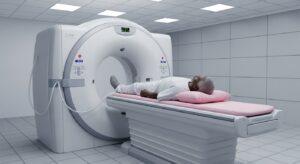
Before treatment is given, a patient has to undergo a PET scan for diagnosis to map the site of the cancer. This is called a “theranostic” approach, where we combine diagnosis and treatment where we see what we treat and treat what we see. Based on international protocols, a patient can receive 4-6 cycles of this therapy given every 6-8 weeks.
This treatment requires strong collaboration among various healthcare professionals including oncologists, nuclear medicine physicians, urologists, medical physicists, radiopharmacists, nuclear medicine technologists and nursing teams. Each plays a vital role from patient selection and imaging to preparing the radiopharmaceutical and administering the treatment safely. This ensures the therapy is delivered effectively, safely, and with the best possible outcomes for patients.
Future Outlook
Looking ahead, this therapy holds great promise to transform prostate cancer care in Kenya and beyond. However, several challenges remain, such as the need for trained specialists, lack of government subsidies, proper infrastructure and supply chain complexities. Despite these hurdles, significant opportunities are available via increasing awareness, expanding training programs, increasing investment in infrastructure, influencing policy and engaging local distributors to simplify supply chain. Kenya can become a regional leader in advanced cancer treatment with the right support and collaboration. Most importantly, these advances translate into real human impact.